
How Extended Reality Is Transforming STEM Education in 2026
Extended reality in STEM education is no longer a showcase demo that students try once a year. In 2026, lighter headsets, hand tracking and tablet based augmented reality have made it practical for regular science, technology, engineering and maths lessons, often called STEM education. But the change is not equal across subjects. Some topics are being transformed. Others barely benefit.
Instead of repeating general benefits, this article looks at each STEM subject one by one and asks a simple question: how big is the gap between what students must imagine and what they can actually see? We call this the imagination gap. The bigger the gap, the more XR helps.
What Changed in 2026
A few years ago, XR in schools meant heavy headsets, cables and a trained technician. Several practical shifts have changed that.
- Standalone headsets. No computer or cables needed, so a class can be set up in minutes.
- Hand tracking. Students use their own hands instead of controllers, which feels natural for lab work.
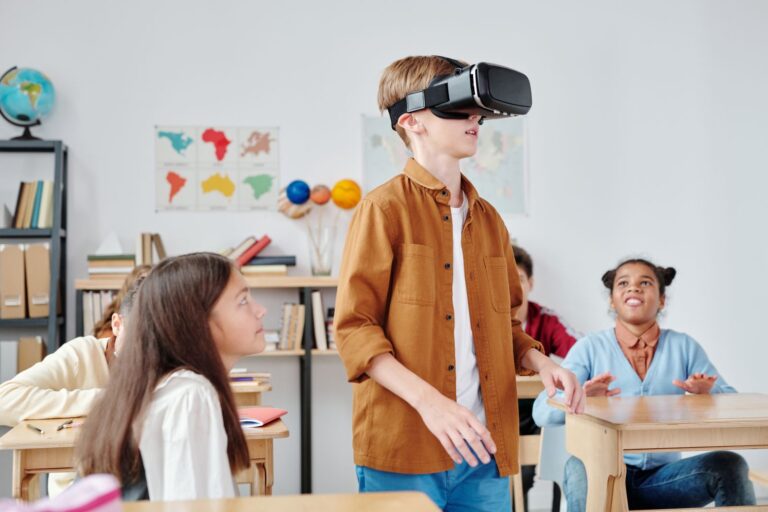
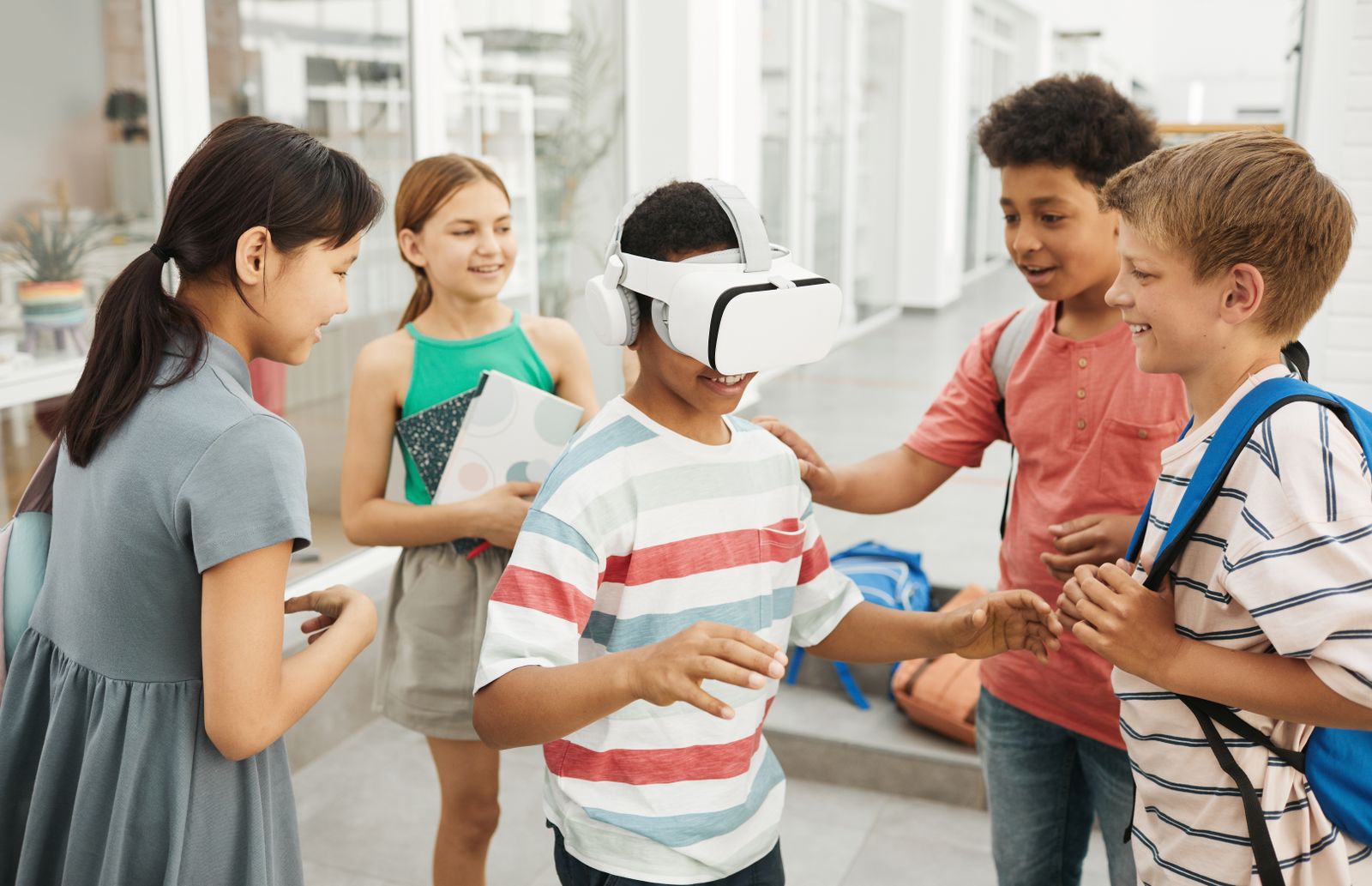
- Passthrough mixed reality. Students see the real room with digital objects in it, which reduces motion sickness and keeps them aware of classmates.
- Browser based XR. Many lessons now open in a web browser, on a tablet or a headset, with no app install.
- Shared sessions. A teacher can guide a whole class through the same virtual scene at once.
- AI built scenes. Teachers can describe a scene in words and get a usable draft in minutes. We explore this in our article on AI and extended reality in education.
Together these six shifts move extended reality in STEM education from special event to ordinary lesson tool.
Subject by Subject: Where Extended Reality in STEM Education Helps Most
Physics: high imagination gap
Forces, fields, waves and orbits are invisible. Students must picture arrows that do not exist. In XR, they can see magnetic field lines bend around a magnet, slow down time to watch a collision or stand on a planet and feel how gravity changes a jump. Physics gains a lot, especially in mechanics and electromagnetism. Free 2D simulations like PhET are still excellent for many topics, so XR should be saved for ideas that truly need 3D.
Chemistry: high imagination gap
Molecules are 3D shapes, and bonding makes far more sense when you can hold a molecule and turn it. XR also lets students try reactions that are too dangerous or too costly for a school lab. The smart approach is to rehearse in XR and then perform the safe version for real.

Biology: high imagination gap
Cells, organs and body systems are either too small or hidden inside the body. Walking through a heart or watching a cell divide around you is one of the strongest use cases of extended reality in STEM education. It also reduces the need for dissection in schools that prefer not to use it.
Engineering and technology: medium to high gap
Machines have hidden parts. XR lets students explode a gearbox into pieces, assemble it again and see how power flows. This links closely with digital twin technology, where the virtual machine is fed by real data.
Earth and space science: very high gap
Nobody can visit the core of the earth or the surface of Mars on a school trip. XR is close to the only way to give students a sense of scale, distance and structure here.
Mathematics: low to medium gap
This is where honesty matters. Most school maths does not need a headset. The exception is 3D geometry and vectors, where rotating a solid or slicing a cone in space really helps. For algebra and arithmetic, paper and a good teacher still win.
A Quick Imagination Gap Score Table
| Subject area | Imagination gap | XR value |
|---|---|---|
| Earth and space | Very high | Very high |
| Biology | High | High |
| Chemistry | High | High |
| Physics | High | High |
| Engineering | Medium to high | High |
| Mathematics | Low to medium | Selective |
This table is our own analysis based on how abstract each topic is. Use it as a planning guide, not as a strict rule.
Why Extended Reality in STEM Education Builds Skills, Not Just Interest
Most articles focus on engagement. Students do enjoy XR, but enjoyment fades. The longer lasting gain is in three skills STEM careers demand.
- Spatial thinking: picturing objects in 3D, which engineers, surgeons and architects use daily.
- Systems thinking: seeing how parts affect each other.
- Safe experimentation: trying ideas, failing and adjusting without fear.

What Still Does Not Work Well
- Long sessions. Beyond 15 to 20 minutes, comfort and focus drop.
- Writing heavy tasks. Taking notes in a headset is awkward.
- Replacing real labs entirely. Students still need real tools, real smells and real mistakes.
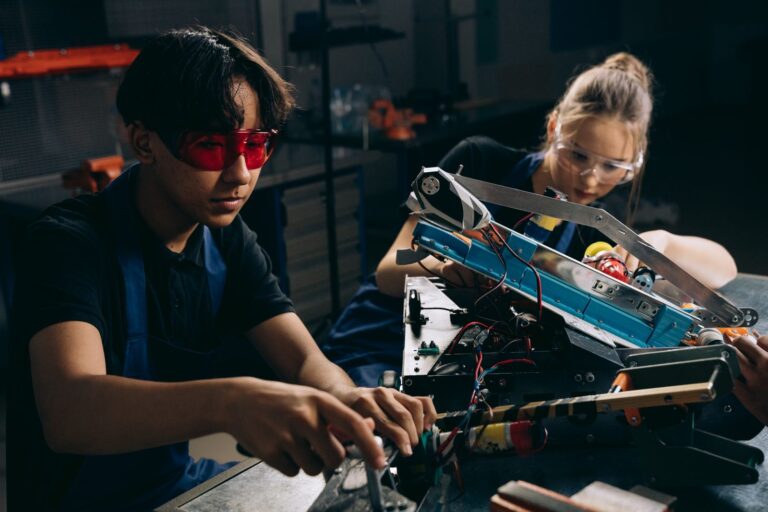
The best schools use extended reality in STEM education as a bridge. Students explore virtually, then build or test physically, as our experiential learning model encourages.
How to Measure the Impact of Extended Reality in STEM Education
Many schools buy headsets and then cannot say whether they helped. A simple before and after check solves this. Before the XR session, give students three short questions on the topic. After the session and the class discussion, give three similar questions. Compare the results across two or three topics.
Also watch for softer signs. Do quiet students ask more questions? Do students explain a process using their hands, as if they are still holding the model? Do fewer students say “I cannot picture it”? These small signals often appear before marks change.
Finally, compare the cost per student hour. A headset shared by 40 students across a term can work out cheaper per student hour than a single field trip, depending on local prices. Tracking these numbers keeps extended reality in STEM education grounded in results rather than excitement.
A 2026 Starter Plan for Schools
- Pick two topics with the biggest imagination gap in your syllabus.
- Run one short XR session per topic per term.
- Pair every session with a real activity and a discussion.
- Ask students what changed in their understanding, and adjust.
Frequently Asked Questions
Is extended reality in STEM education suitable for government schools?
Yes, if it starts small. Tablet based AR and a shared set of a few headsets can serve a whole school on a rotation.
Does extended reality in STEM education replace practical labs?
No. It prepares students for labs and covers experiments a school cannot safely run. Real practical work stays essential.
Which STEM subject should start first?
Biology or physics, because the imagination gap is large and ready made content is widely available.
Conclusion
Extended reality in STEM education is transforming the subjects where students struggle most to imagine what is happening. Measure the imagination gap, start where it is biggest and always connect the virtual lesson to real hands-on work. Explore how ARCS designs these programs on our Extended Reality Technology page.