Industry 4.0 Skills: 6 Essential Skills Digital Twins Teach Students
Industry 4.0 skills are the abilities people need to work in smart factories, where machines are connected, data flows in real time and decisions are supported by software. They mix engineering basics with data, automation and digital tools. Employers across India say these skills are in short supply.
Most lists of Industry 4.0 skills stop at buzzwords like “IoT” and “AI”. That is not much help to a college planning its labs. In this article we list six essential skills, explain each one in plain words, and show exactly how a digital twin can teach it.
What Is Industry 4.0, in Simple Words?
Industry 4.0 is the fourth industrial revolution. The first used steam, the second used electricity, and the third used computers and automation. The fourth connects everything. Machines talk to each other, sensors report their health, and software predicts problems before they happen.
The heart of this revolution is the digital twin, a live virtual copy of a real machine or factory. That is why digital twins are also one of the best ways to teach Industry 4.0 skills.
6 Essential Industry 4.0 Skills
1. Reading and using machine data
Modern machines produce streams of data: speed, temperature, vibration, power use. Workers must understand what normal data looks like and spot when something changes. This is the foundation of every other skill on this list.
2. Automation and PLC programming
Most factory automation runs on a programmable logic controller, or PLC. Engineers need to write, test and fix PLC programs that control conveyors, robots and valves.
3. Connected devices and IoT
Sensors, gateways and cloud dashboards connect the factory floor to the office. Students should know how data moves from a sensor to a screen, and how to keep it secure. The Internet of Things is the backbone of this connection.
4. Predictive maintenance
Instead of fixing machines after they break, smart factories fix them just before. This needs people who can read trends, understand failure patterns and plan maintenance windows.
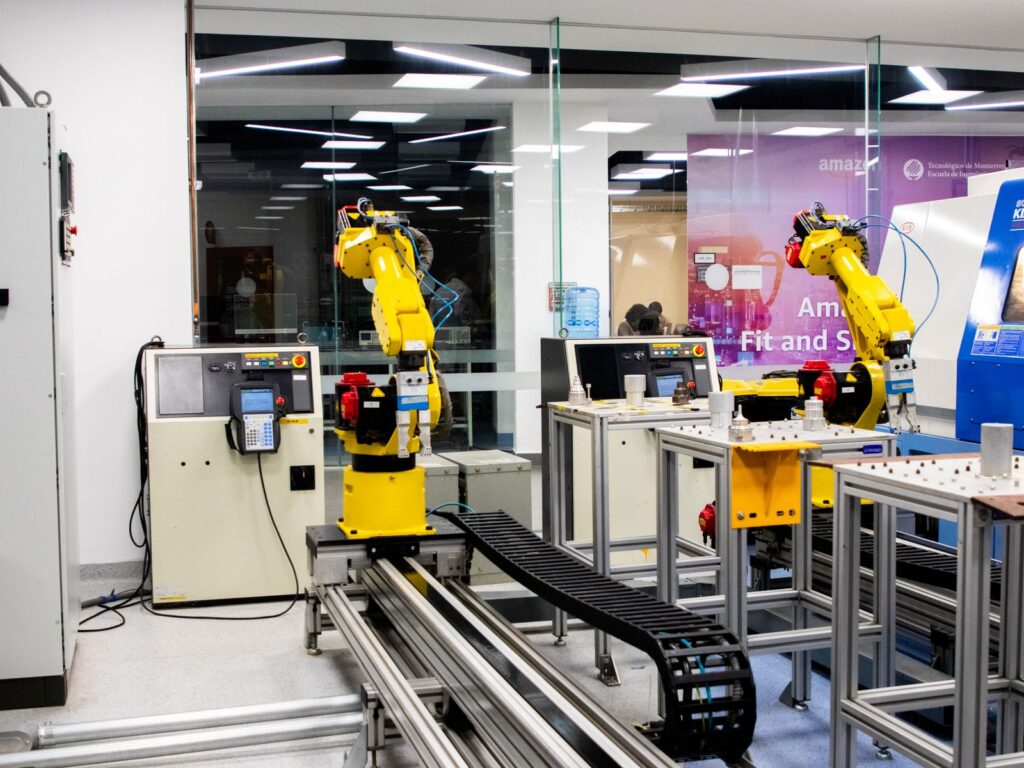
5. Robotics and human-robot teamwork
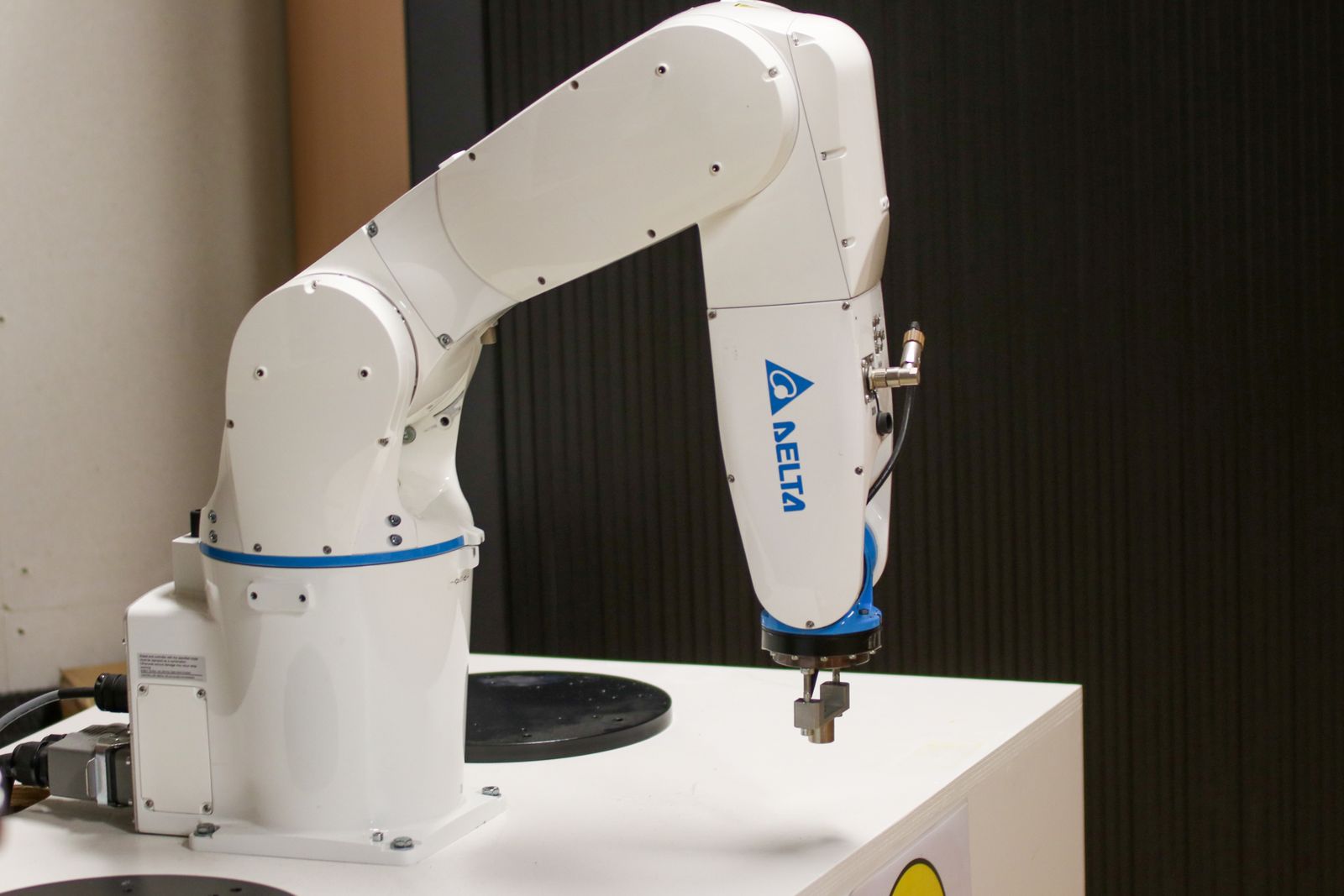
Robots now work beside people. Engineers must program robot paths, set safety zones and design workflows where humans and robots share tasks safely.
6. Systems thinking and problem solving
The most valuable skill is seeing the whole system. A small change in one machine can slow an entire line. Workers who understand these links solve problems faster and make better decisions.
The Skill-to-Twin Map
Here is how a single digital twin of a small production line can teach all six Industry 4.0 skills.
| Skill | What students do on the twin |
|---|---|
| Machine data | Watch live readings and label normal and abnormal patterns |
| PLC programming | Write control logic and test it on the twin before using real hardware |
| IoT | Connect virtual sensors to a dashboard and set alerts |
| Predictive maintenance | Study a slowly failing bearing and decide when to replace it |
| Robotics | Program a virtual robot arm and check for collisions |
| Systems thinking | Change one machine’s speed and measure the effect on the whole line |
In short, one well-built twin becomes a full Industry 4.0 training ground. For a deeper look at this approach, read our guide on using a digital twin for engineering education.
Why Digital Twins Teach These Skills Better
Real smart factory equipment is expensive and rarely available in colleges. Even when it is, teachers cannot let students crash a robot or stop a production line to learn. A twin removes these limits. Students can break things, start again and experiment freely.
In addition, twins give instant feedback. When a PLC program fails, the virtual conveyor jams immediately, and the student sees why. This fast loop of try, fail and fix is exactly how professionals learn on the job.
Project Ideas That Build Industry 4.0 Skills
Final-year projects are a great way to prove these skills to employers. Here are some ideas that work well with a digital twin:
- A fault detection dashboard that warns before a motor overheats
- An energy-saving controller that cuts power use on an idle conveyor
- A robot pick-and-place routine optimised for speed and safety
- A quality check system that flags faulty parts using sensor data
- A maintenance planner that schedules repairs from twin data
Each project produces something students can show in an interview, which matters more than a list of courses on a CV.
What Employers Check in Interviews
Recruiters rarely ask students to define Industry 4.0. Instead, they ask practical questions. What would you check first if a conveyor slowed down? How would you know a motor is about to fail? Can you explain a PLC program you wrote? Students who have spent a semester on a digital twin can answer these questions with real examples. They can describe the fault they found, the data that revealed it and the fix they tested. That kind of answer shows genuine Industry 4.0 skills, and it stands out in a crowded placement season.
How Colleges Can Get Started
Start small. Choose one lab system, connect a few sensors and build a twin around it. Map the twin to existing subjects so it supports the syllabus rather than adding to it. Then grow it each semester.
This also fits current trends. Our article on digital twin in education trends for 2026 shows where the field is heading, and our list of the benefits of digital twin technology for students explains the gains beyond Industry 4.0 skills.
Frequently Asked Questions
Which branches need Industry 4.0 skills?
Mechanical, electrical, electronics, mechatronics, computer science and production engineering all need them, along with ITI and diploma trades.
Can students learn these skills without a factory visit?
Yes. A digital twin gives realistic practice. Factory visits are still valuable, but they are no longer the only way.
How long does it take to build these skills?
Basic data and automation skills can be built in one semester of regular twin practice. Advanced skills grow through projects.
Conclusion
Industry 4.0 skills are now basic job requirements, not extras. Data, automation, IoT, predictive maintenance, robotics and systems thinking can all be taught on one well-built digital twin. Start with one system, link it to your syllabus, and let students learn by doing. To set up an Industry 4.0 learning twin at your institution, explore our Digital Twin Technology solutions or contact the ARCS team.