
From Classrooms to Virtual Worlds: The Rise of AR & VR in Indian Education
Education in India is going through a remarkable transformation. For many years, classrooms have been limited to blackboards, textbooks, and one-way teaching methods. While these have built strong academic foundations, they often leave students struggling to connect with what they learn.
Today, that gap is slowly closing. With the rise of Augmented Reality (AR) and Virtual Reality (VR), education is moving beyond traditional classrooms and entering immersive virtual worlds. This shift is not just technological—it is redefining how students understand, experience, and apply knowledge.
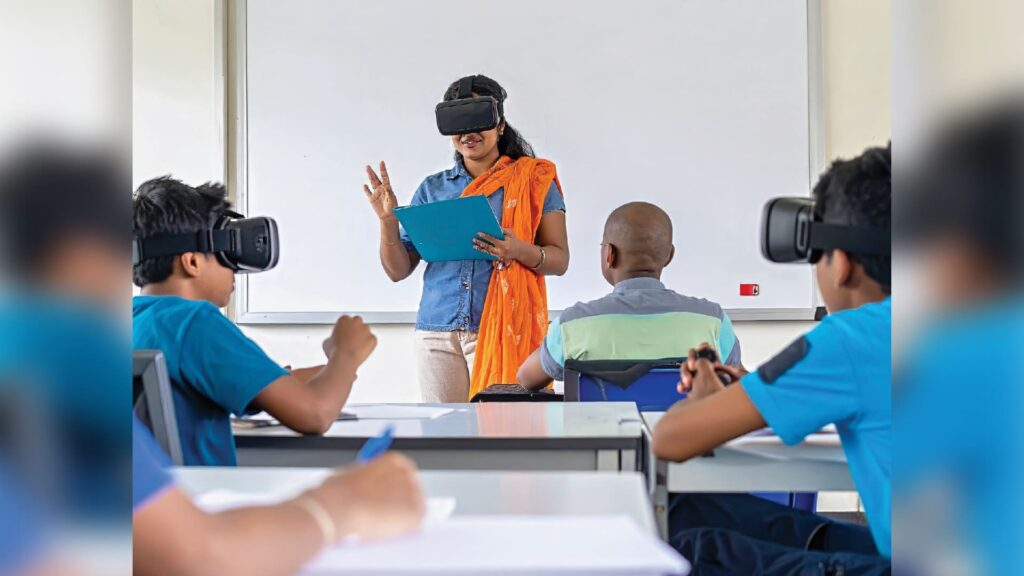
From Passive Learning to Active Exploration
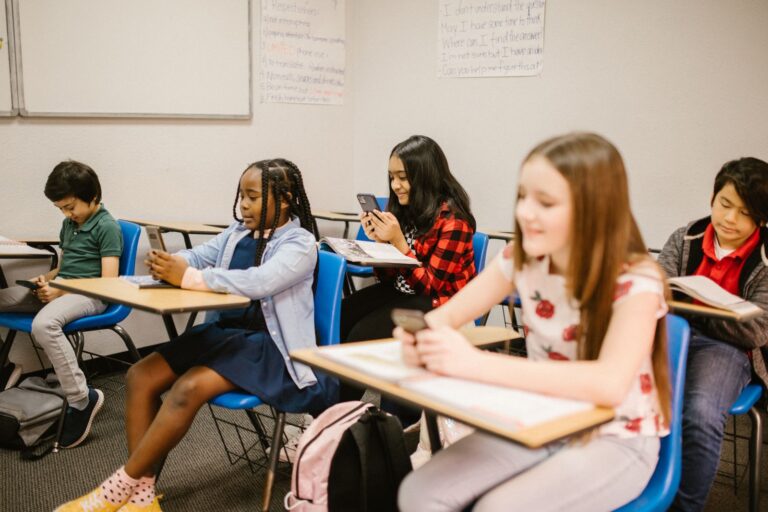
In traditional classrooms, students often listen, take notes, and memorize information. This passive approach can make learning feel difficult and sometimes boring. AR and VR are changing this by turning students into active participants.
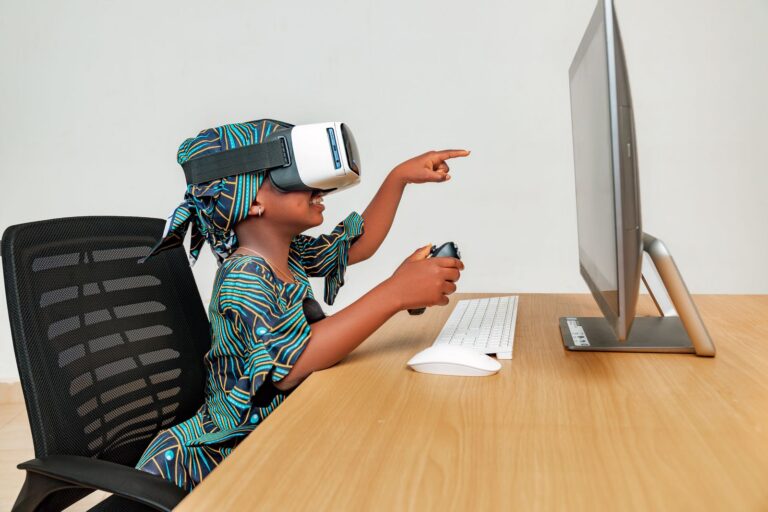
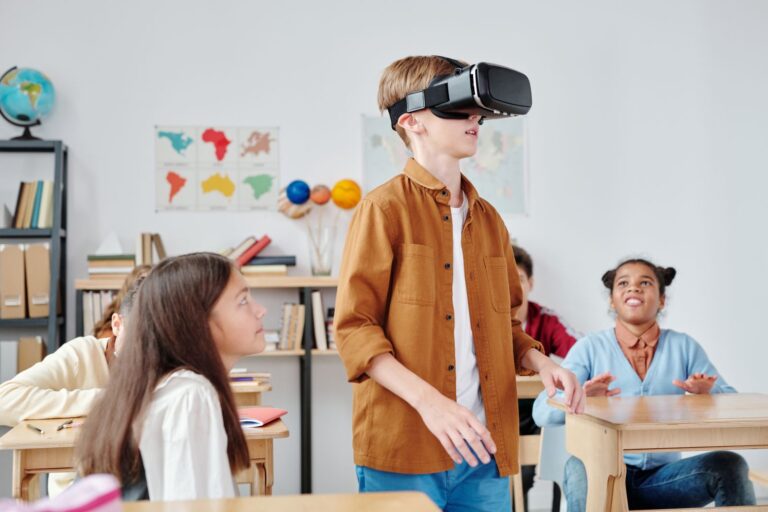
Instead of imagining concepts, students can now explore them. They can step inside a virtual environment, interact with objects, and see how things work in real time. This kind of active learning improves both understanding and retention.
Learning is no longer something students just “do”—it’s something they experience.
Bringing Virtual Worlds into Real Education
AR and VR introduce a completely new dimension to learning. They create virtual worlds where students can explore subjects in depth without physical limitations.
For example:
- Science students can enter a virtual lab and conduct experiments
- Geography lessons can take students across continents
- History classes can recreate ancient civilizations
These experiences make learning more meaningful and memorable. Students are not just studying—they are discovering.
Making Complex Subjects Simple
Subjects like physics, chemistry, and mathematics can be challenging for many students. Understanding abstract concepts through textbooks alone is not always effective.
AR and VR simplify these topics by making them visual and interactive. When students can see a concept in action, it becomes easier to understand.
For instance, instead of reading about molecular structures, students can view and interact with them in 3D. This clarity reduces confusion and builds confidence.
Enhancing Student Engagement and Interest
One of the biggest benefits of AR and VR is their ability to capture attention. In a digital age where distractions are everywhere, keeping students engaged is a major challenge.
Immersive learning experiences naturally attract interest. Students become curious, ask questions, and participate more actively. This leads to better academic performance and a positive learning attitude.
When students enjoy learning, they are more likely to succeed.
Bridging Education and Real-World Skills
There has always been a gap between classroom learning and real-world application. AR and VR help bridge this gap by providing practical experiences.
Students can:
- Practice real-life scenarios
- Develop problem-solving skills
- Gain hands-on experience in a safe environment
This is especially important for career-focused education, where practical knowledge is just as important as theory.
Expanding Opportunities Across India
India’s education system is diverse, with varying levels of access to quality learning. AR and VR have the potential to make high-quality education available to more students.
With digital tools, even students in smaller towns can access advanced learning experiences. This reduces inequality and creates equal opportunities for growth.
Technology is helping education reach every corner of the country.
Supporting Teachers in the Digital Age
Teachers play a crucial role in shaping students’ futures. AR and VR are not replacing them—they are empowering them.
With these tools, teachers can explain concepts more effectively, save time, and create engaging lessons. It allows them to focus more on guiding students rather than just delivering information.
A combination of skilled teachers and advanced technology creates a powerful learning environment.
The Future is Already Here
The rise of AR and VR in Indian education is not a distant vision—it is already happening. Schools, colleges, and edtech platforms are adopting these technologies to improve learning outcomes.
As we move forward, the focus is shifting from traditional methods to smart, experience-based learning. This transformation is preparing students for a future that demands creativity, innovation, and adaptability.
Conclusion
The journey from classrooms to virtual worlds marks a new chapter in Indian education. AR and VR are making learning more interactive, engaging, and practical.
They are helping students understand better, explore more, and build real-world skills. Most importantly, they are turning education into an experience rather than a routine.
The future of education in India is not limited by walls—it is limitless, immersive, and full of possibilities.