The Power of AR & VR in Education: Making Learning Easy, Engaging, and Real
Education is one of the most powerful tools for shaping the future. In India, learning has traditionally focused on textbooks, exams, and memorization. While this system has helped build knowledge, it often makes learning feel difficult and disconnected from real life.
Today, that is changing. With the rise of Augmented Reality (AR) and Virtual Reality (VR), education is becoming more simple, engaging, and meaningful. These technologies are not just improving learning—they are transforming the way students experience knowledge.
Making Learning Easy to Understand
Many students struggle with subjects that involve complex ideas, especially in science and mathematics. Reading long explanations or looking at static diagrams is not always enough.
AR and VR make learning easier by turning abstract concepts into visual experiences. Students can see how things work in real time instead of imagining them.
For example, instead of reading about the human body, students can explore it in 3D. Instead of solving equations blindly, they can understand how formulas work visually. This clarity helps students learn faster and with more confidence.
Turning Lessons into Engaging Experiences
One of the biggest challenges in education is keeping students interested. When lessons feel repetitive or difficult, students lose focus.
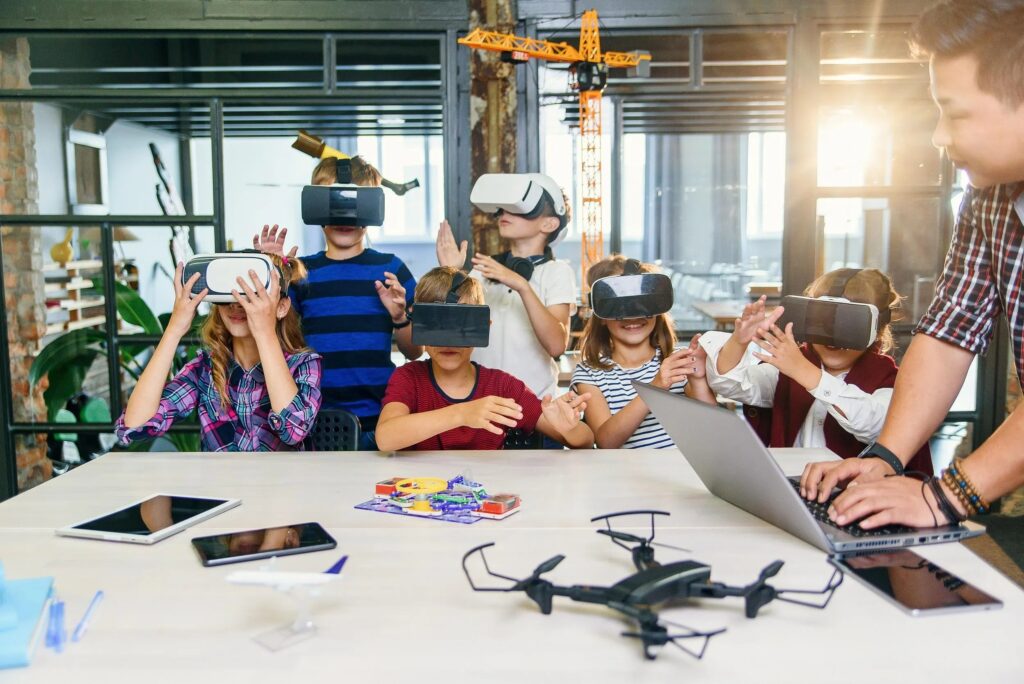
AR and VR solve this by making learning interactive. Lessons become experiences rather than tasks. Students can explore, interact, and discover concepts in a fun and exciting way.
Whether it’s walking through a virtual forest in a biology class or exploring space in a science lesson, these experiences capture attention and spark curiosity.
When students enjoy learning, they naturally perform better.
Making Learning Feel Real
A major limitation of traditional education is the lack of real-world connection. Students often learn theories but don’t see how they apply in real life.
AR and VR bridge this gap by creating realistic simulations. Students can practice real-life scenarios in a safe and controlled environment.
For example:
- Medical students can practice procedures virtually
- Engineering students can test designs
- School students can perform experiments without a physical lab
This makes learning practical and prepares students for real-world challenges.
Boosting Confidence and Creativity
When students understand concepts clearly and engage with them actively, their confidence grows. They are more willing to ask questions, try new ideas, and explore deeper.
AR and VR also encourage creativity. Students are not limited to reading and writing—they can build, design, and experiment in virtual spaces.
This kind of learning develops important skills like:
- Critical thinking
- Problem-solving
- Innovation
These skills are essential for future success.
Supporting Teachers with Better Tools
Teachers are at the heart of education. AR and VR are not replacing them—they are making their job easier and more effective.
With immersive tools, teachers can explain concepts in a more engaging way. They can simplify difficult topics and keep students interested throughout the lesson.
This allows teachers to focus more on guiding and supporting students rather than repeating explanations.
Creating Equal Learning Opportunities
India has a wide range of educational environments, from urban schools to rural classrooms. Not all students have access to the same resources.
AR and VR can help bridge this gap. With digital platforms, high-quality learning experiences can reach students anywhere. This creates equal opportunities and improves overall education quality.
Technology is making education more inclusive and accessible.
The Future of Smart Education
As we move forward, AR and VR will play a bigger role in shaping education in India. Schools and edtech platforms are already adopting these technologies to improve learning outcomes.
The focus is shifting from memorizing information to understanding and applying it. Learning is becoming more interactive, practical, and student-centered.
This is the true meaning of smart education.
Conclusion
The power of AR and VR in education lies in their ability to make learning easy, engaging, and real. They help students understand better, stay interested, and connect knowledge with real-life experiences.
In today’s world, education is no longer just about studying—it’s about experiencing, exploring, and growing.
With AR and VR, learning becomes more than just a process.
It becomes a journey that prepares students for the future with confidence and creativity.