
Infrastructure & Learning Ecosystem
Beyond physical buildings and classroom spaces, infrastructure encompasses the networks, technologies, environments, and support systems that enable meaningful education.
Building the Foundation for Learning
Infrastructure and the learning ecosystem together form the foundation upon which meaningful educational experiences are built. A well-designed learning ecosystem creates conditions where knowledge flows easily, creativity is encouraged, and learning is accessible, inclusive, and future-ready.
In many traditional systems, infrastructure has been viewed primarily in terms of facilities or hardware — desks, classrooms, laboratories, or digital devices. However, a true learning ecosystem goes further.
It integrates space, technology, culture, pedagogy, and community engagementinto a coherent environment that supports both academic progress and personal development.
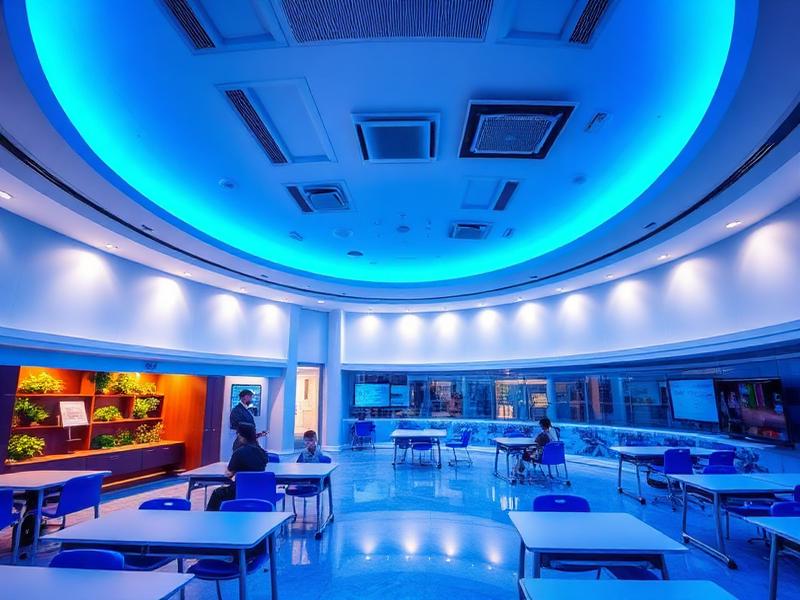
Elements of Our Ecosystem
Our learning ecosystem integrates multiple dimensions for comprehensive educational experiences.
Physical Spaces
Modern classrooms, labs, and collaborative zones designed for interactive learning.
Technology Integration
XR devices, digital platforms, and hybrid learning tools seamlessly integrated.
Cultural Environment
A culture of curiosity, innovation, and continuous improvement.
Pedagogy
Teaching methods that prioritise understanding over memorisation.
Community Engagement
Connections with families, industries, and local communities.
Support Systems
Mentors, counsellors, and resources that support learner wellbeing.

Adaptability & Accessibility
A thriving learning ecosystem values adaptability. Modern learning environments must evolve with new technologies, emerging skills, and diverse learner needs.
Flexible spaces, hybrid models, and digital platforms enable personalised learning pathways, while collaborative zones and project-based environments encourage teamwork, problem-solving, and shared responsibility.
Accessibility and equity also play a critical role — ensuring that every learner, regardless of background, has the tools, resources, and support to participate fully.
The Human Ecosystem
Infrastructure also extends to human ecosystems — mentors, educators, peers, families, and community partners who shape the learning climate. Their interactions influence motivation, confidence, and a sense of belonging. When relationships are supportive and inclusive, the ecosystem fosters trust, curiosity, and meaningful engagement.
Ultimately, a strong infrastructure and learning ecosystem do more than deliver content — they cultivate environments where learners can thrive intellectually, socially, and emotionally, preparing individuals to adapt and contribute positively to an ever-changing world.