How AR & VR Are Transforming Education in India: A New Era of Smart Learning
Education in India is stepping into a powerful new phase. For decades, students have depended on textbooks, notes, and classroom lectures. While this system has helped millions learn, it often makes complex subjects difficult to understand. Today, technologies like Augmented Reality (AR) and Virtual Reality (VR) are changing that story—bringing learning to life in ways we’ve never seen before.
This is not just a trend. It’s a transformation.
Learning Beyond Books
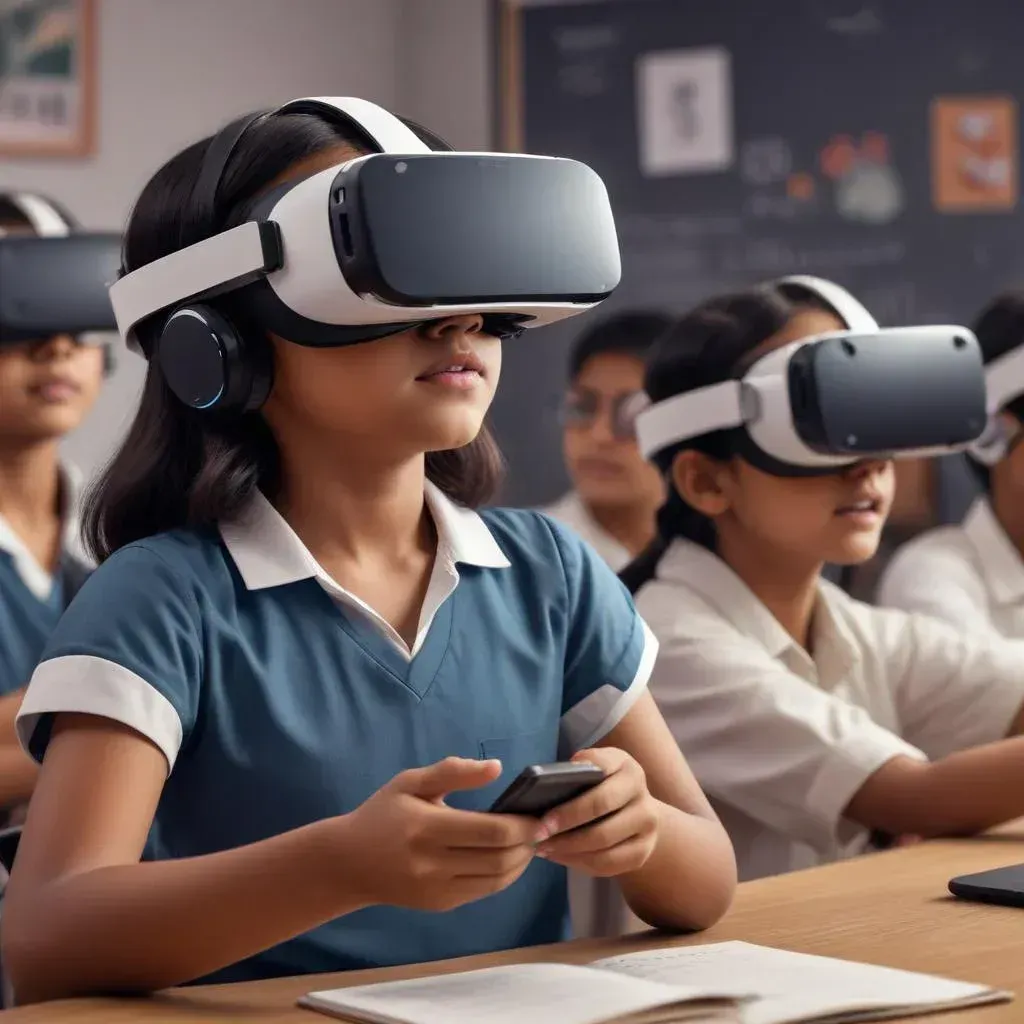
Imagine learning biology not by memorizing diagrams, but by exploring a 3D human heart. Or understanding history by walking through ancient civilizations. AR and VR make this possible.
These technologies turn traditional lessons into interactive experiences. Instead of just reading, students can see, hear, and interact with concepts. This helps them understand faster and remember longer.
In a country like India, where classrooms can be crowded and teaching time is limited, this kind of visual learning creates a big impact.
Making Education Simple and Engaging
One of the biggest challenges students face is losing interest. When learning feels difficult or repetitive, attention drops. AR and VR solve this by making lessons exciting and easy to follow.
For example:
- Science becomes a virtual lab
- Geography turns into a global tour
- Mathematics becomes visual and practical
This not only improves understanding but also builds curiosity. Students start enjoying the learning process instead of feeling pressured by it.
Real Learning Through Virtual Experience
There is often a gap between what students study and what they experience in real life. AR and VR help bridge this gap.
With VR simulations, students can perform experiments, explore environments, and practice skills without risk. They can make mistakes, learn from them, and try again—all in a safe digital space.
This is especially helpful for:
- Medical students practicing procedures
- Engineering students testing designs
- School students learning science experiments
Learning becomes practical, not just theoretical.
Preparing Students for the Future
The world is changing rapidly, and future careers require more than just textbook knowledge. Skills like problem-solving, creativity, and adaptability are now essential.
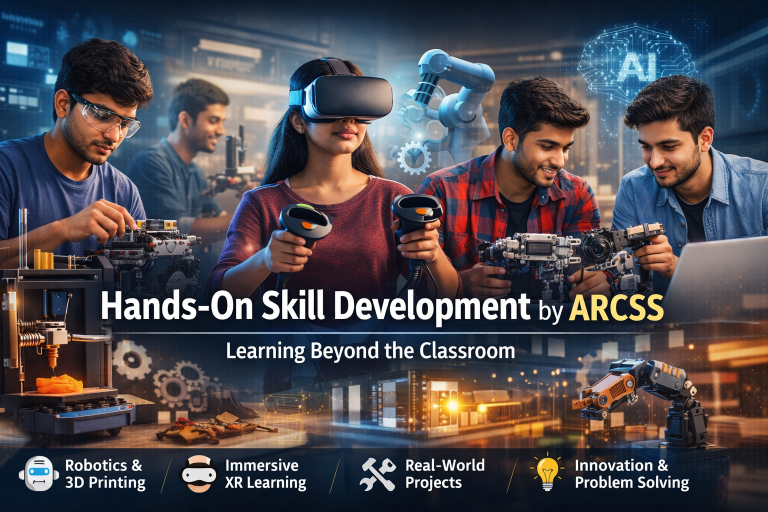
AR and VR-based learning helps students develop these skills naturally. By interacting with technology, they become more confident and ready for modern careers.
It also introduces them to future technologies early, giving them an advantage in fields like AI, robotics, and digital innovation.
Reaching Every Corner of India
India has a diverse education system, with different levels of access in cities and rural areas. AR and VR can help reduce this gap.
With digital platforms, high-quality learning experiences can reach students anywhere. A student in a small town can access the same immersive lessons as someone in a metro city.
This creates equal opportunities and supports inclusive education.
Supporting Teachers, Not Replacing Them
There is a common fear that technology might replace teachers. In reality, AR and VR act as powerful tools to support them.
Teachers can use these technologies to explain concepts more clearly, save time, and focus on student engagement. It enhances teaching rather than replacing it.
A great teacher with the right technology can create an unforgettable learning experience.
The Future of Smart Learning
As we move forward, AR and VR will become a key part of education in India. Schools, colleges, and edtech platforms are already adopting these tools to improve learning outcomes.
But the real change is not just about technology—it’s about mindset. It’s about moving from “learning to pass exams” to “learning to understand and grow.”
Conclusion
AR and VR are transforming education in India by making learning more interactive, simple, and meaningful. They help students connect with what they learn, build confidence, and prepare for the future.
This new era of smart learning is not about replacing traditional education—it’s about making it better.
Because when students don’t just study, but truly experience learning, education becomes powerful, personal, and unforgettable.